Agricultural Solar Battery Storage: Complete UK Guide 2025
Battery storage is rapidly becoming a standard addition to farm solar installations. This guide explains when it makes financial sense, how to size a system correctly, which technologies work best on agricultural sites, and what you can realistically expect to pay in 2025.
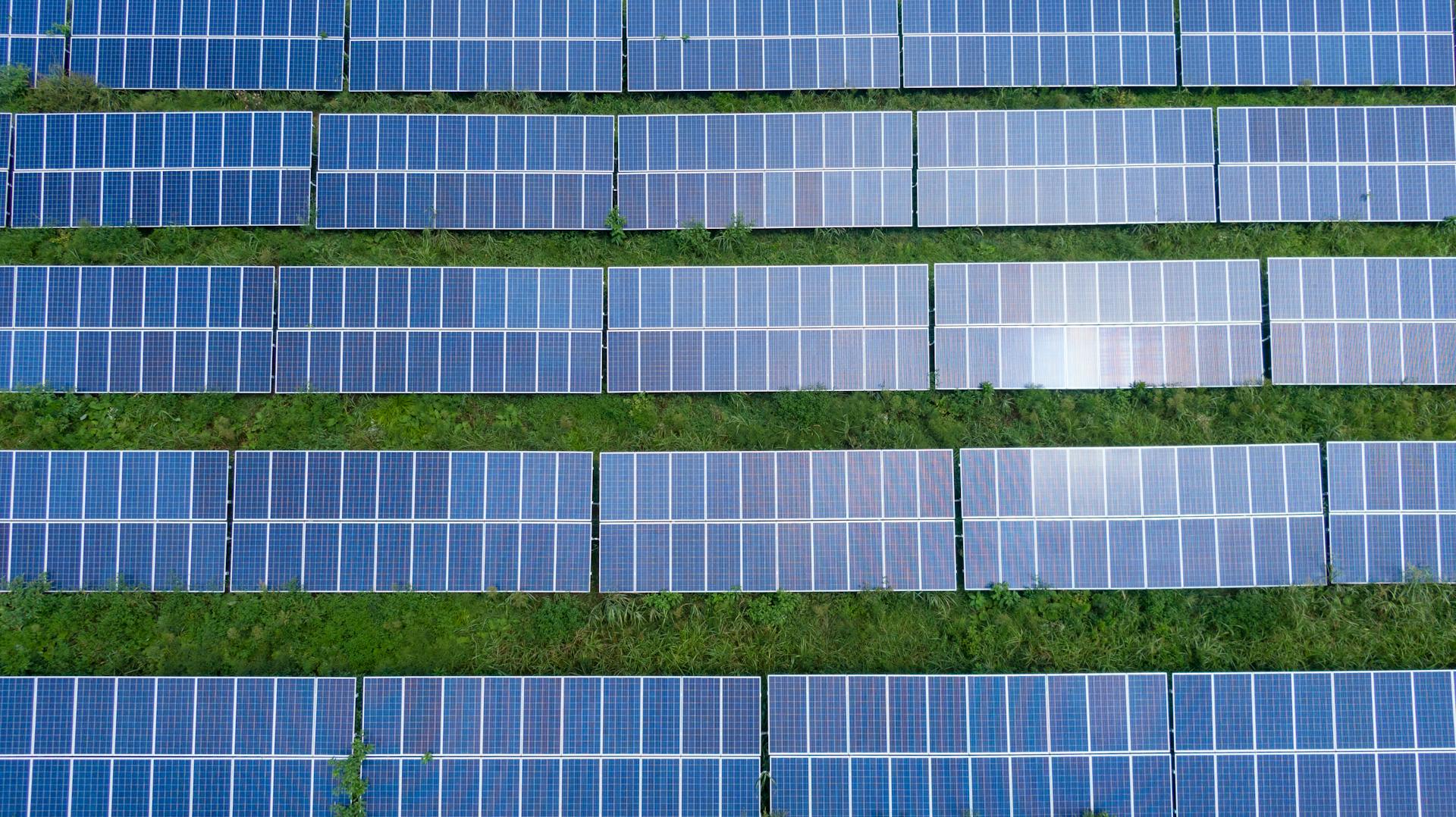
What Is Agricultural Solar Battery Storage?
Agricultural solar battery storage refers to large-format lithium-ion or lead-acid battery systems connected to a farm's solar array and electrical distribution. During daylight hours, when solar panels generate more electricity than the farm is using, the surplus is stored in the battery rather than exported to the grid at low Smart Export Guarantee rates. In the evening, overnight, or during periods of cloud cover, stored energy is released to meet the farm's demand — avoiding grid purchases at retail rates.
For most UK farms, solar panels alone achieve 50-70% self-sufficiency in summer and 20-40% in winter. Adding appropriately sized battery storage can push these figures to 70-90% and 40-60% respectively, significantly increasing the proportion of energy supplied at zero marginal cost.
Is Battery Storage Right for Your Farm?
Battery storage delivers the best financial returns when your farm has a significant mismatch between solar generation (which peaks at midday) and energy consumption (which often peaks in the morning and evening). The following farm types typically see the strongest case for battery storage:
Strong Case for Battery Storage
- → Dairy farms with early morning milking loads and late evening cleaning cycles
- → Poultry farms with 24-hour environmental control requirements
- → Pig farms with overnight farrowing house heating demands
- → Livery yards with evening arena floodlighting
- → Farms exporting more than 40% of generated solar electricity to the grid
Weaker Case for Battery Storage
- → Arable farms with high midday energy loads (grain drying) and low evening demand
- → Farms already self-consuming over 80% of solar generation
- → Farms with very high SEG rates (above 15p/kWh) may benefit more from exporting than storing
Battery Storage Sizing for Agricultural Systems
The key principle in sizing agricultural battery storage is matching the battery capacity to the volume of daily surplus solar generation you wish to capture, not to the size of the solar array. Over-sizing a battery relative to daily solar surplus delivers diminishing returns, as the battery is charged and discharged less frequently — reducing both financial benefit and battery lifespan utilisation.
| Solar System Size | Typical Daily Surplus | Recommended Battery | Indicative Cost |
|---|---|---|---|
| 20-30 kW | 20-40 kWh (summer) | 10-20 kWh usable | £7,000-£14,000 |
| 50-80 kW | 50-100 kWh (summer) | 30-50 kWh usable | £18,000-£32,000 |
| 100-150 kW | 100-200 kWh (summer) | 50-100 kWh usable | £32,000-£65,000 |
| 150-300 kW | 200+ kWh (summer) | 100-200 kWh usable | £65,000-£130,000 |
Battery Technologies for Farm Use
Lithium iron phosphate (LFP) chemistry has become the dominant technology for agricultural battery storage. LFP batteries offer excellent thermal stability, a long cycle life (typically 4,000-6,000 full cycles, equivalent to 11-16 years at daily cycling), and high safety compared to other lithium chemistries. They are also less sensitive to temperature extremes than NMC batteries — an important consideration for farm buildings that may not be temperature-controlled.
The leading manufacturers supplying agricultural installations in the UK in 2025 include Sungrow (SBR series), BYD (Battery-Box), CATL (Tener series for larger installations), and Pylontech. All of these are integrated directly with compatible inverter platforms such as Sungrow, SolarEdge, Huawei FusionSolar, and Victron Energy.
Typical Payback Period for Agricultural Battery Storage
The payback period for battery storage added to a farm solar system is typically 6-10 years on its own merits — longer than the solar panels themselves (typically 4-7 years). However, battery storage should be evaluated as part of the integrated system, not in isolation. The combined solar + storage system typically achieves payback in 4-6 years for farms with strong evening demand profiles.
The economics of battery storage improve significantly when electricity tariffs rise above 25p/kWh (the break-even point relative to typical SEG rates) and when time-of-use tariffs allow export at different rates in peak periods. Farms on variable rate contracts can programme battery systems to charge from the grid during cheap overnight rates and discharge during peak periods — a strategy called arbitrage that can significantly improve returns beyond simple self-consumption.
Installation Considerations for Farm Batteries
Agricultural battery systems present specific installation challenges compared to domestic units. Large agricultural batteries (above 50 kWh) must comply with BS EN IEC 62619 and may require specific planning consent if housed in a new structure. Battery enclosures on farms should be:
- Sited away from combustible materials and livestock housing (minimum 3m separation recommended)
- Ventilated to prevent heat build-up during charge cycles
- Fitted with appropriate fire suppression or detection systems for installations above 100 kWh
- Protected against rodent ingress — a particular concern in grain stores and animal feed areas
- Accessible for annual inspection and maintenance
Our installation team designs battery enclosures as an integral part of every agricultural storage project, ensuring compliance with all relevant regulations without compromising your operational workflows.
Should You Retrofit Battery Storage or Install It with Solar?
Installing battery storage at the same time as solar panels is generally more cost-effective than retrofitting later — the mobilisation costs for electricians and scaffolding are shared across the whole project. However, the financial case for batteries is not always strong enough to justify immediate installation, particularly on farms with low evening demand profiles.
The pragmatic approach is to install a solar system with a battery-ready hybrid inverter from the outset, at minimal additional cost, then assess the performance data after 6-12 months of operation before deciding whether and how much battery storage to add. This approach avoids committing capital prematurely while preserving full flexibility to retrofit later.
Get Expert Advice on Your Farm's Battery Storage Options
Our agricultural solar specialists will analyse your farm's energy consumption profile and model the financial impact of different battery storage scenarios — helping you make an informed decision based on your specific circumstances, not generic rules of thumb.
Book a Free Energy Assessment