Solar Panels for Farm Buildings: the UK Guide
Yields by region, the planning and grid rules, the tax relief that actually applies and which grants are open — sourced and dated. Then fixed-price quotes from installers matched to your buildings.
- Independent guidance
- Sourced 2026 data
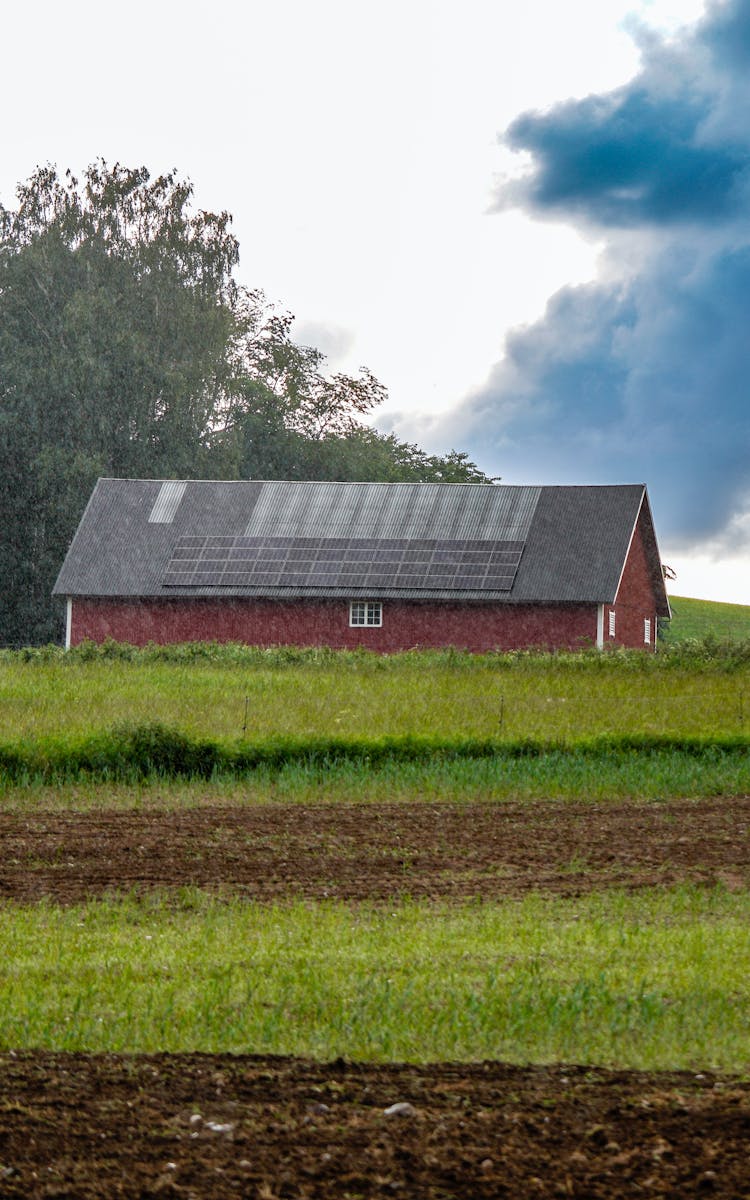
Solar panels for farm buildings deliver one of the strongest commercial payback profiles in the UK. This site is the independent UK guide to solar panels for agricultural buildings across England, Scotland, Wales and Northern Ireland — from 30 kW single-dairy-parlour installs to multi-megawatt agrivoltaic projects on glasshouse and polytunnel complexes. Every agricultural solar PV enquiry starts with half-hourly meter data and an honest assessment of whether the numbers stack up.
Farm building solar panels deliver 4–7 year typical payback before tax relief, 3–5 years after the 100% Annual Investment Allowance for incorporated farms. The eight headline UK farm building types covered here: dairy parlours, livestock sheds, grain stores, poultry sheds, pig units, polytunnels and glasshouses, equestrian arenas, and farm workshops. Every cost, grant and SEG figure on this site is sourced and dated — last reviewed September 2026. For the rules and cost picture by building type see solar panels for agricultural buildings; for how to choose an installer see agricultural solar panel installers; for the permitted-development limits see planning permission for solar panels on farm buildings.
The economics of solar panels for farm buildings in 2026
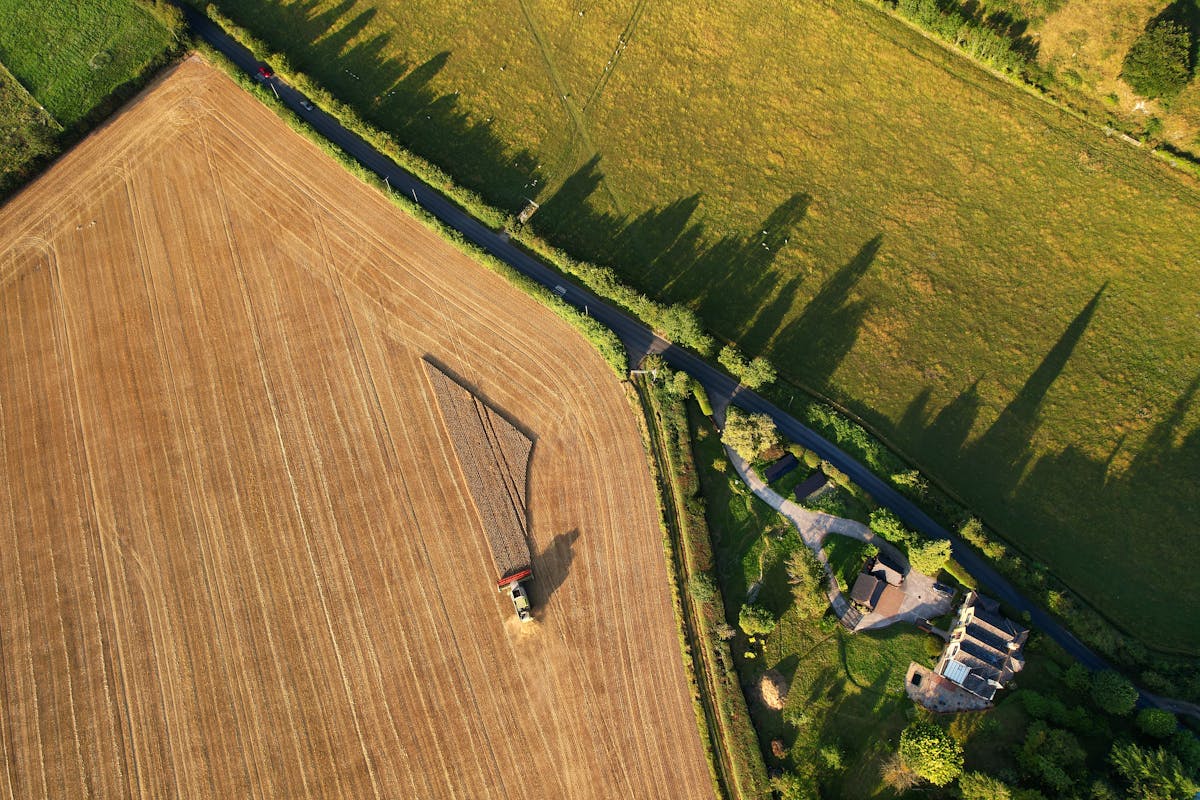
Farm buildings are the single biggest untapped commercial PV opportunity in UK rural infrastructure. The UK has roughly 600,000 farm holdings and an estimated 1.2 million agricultural buildings — clear-span barns, dairy parlours, livestock sheds, grain stores, poultry units, pig finisher houses, polytunnels, equestrian arenas and farm workshops. These structures are typically south-facing, low-shaded, structurally adequate (post-1980 builds) and sit alongside year-round or seasonal electrical loads ideally matched to solar generation. The economics changed decisively in 2024–2025 as commercial grid tariffs settled above 22p/kWh, panel costs continued to drop, and SFI/Sustainable Farming Incentive 2025 opened to renewables-friendly actions. With 100% Annual Investment Allowance on capex, Smart Export Guarantee for surplus generation, and emerging supermarket Scope 3 supplier audits, farm-building solar has moved from a discretionary green project to a core capital allocation decision for any UK farm with significant electrical demand or south-facing barn roofs.
- Sizing starts from your half-hourly meter data and the condition of each roof, not from a generic farm template.
- Asbestos cement roofs usually have to be replaced or over-clad before panels go on, so the re-roof and the PV are best priced together.
- On rented land the landlord's consent and a lease addendum come before any structural work, so start that conversation early.
- With several buildings, rank them on roof condition, daytime load and distance to the main intake before you ask for quotes.
UK farm-building solar: the 2026 numbers
From enquiry to commissioning: the stages
A clear, transparent process — no hidden steps, no high-pressure sales.
- 01
Free desk feasibility
Half-hourly meter data and roof details go into a desk model of system size, yield and self-consumption, which gives an indicative proposal.
- 02
On-site survey
The installer's structural and electrical engineers visit. Final design and a fixed-price proposal follow.
- 03
Permits & DNO
A good installer handles planning (where required), G99 grid connection application, and any grant paperwork.
- 04
Install & commission
On site for the install period set by system size. Final commissioning, customer training, monitoring active.
Specialists across every sub-sector
Each sub-vertical has its own profile — sizing, payback, compliance, grants. Pick yours.
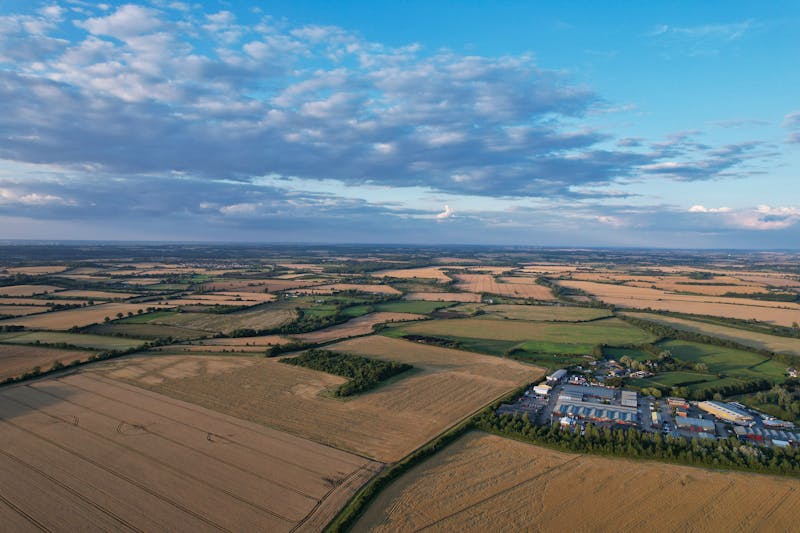
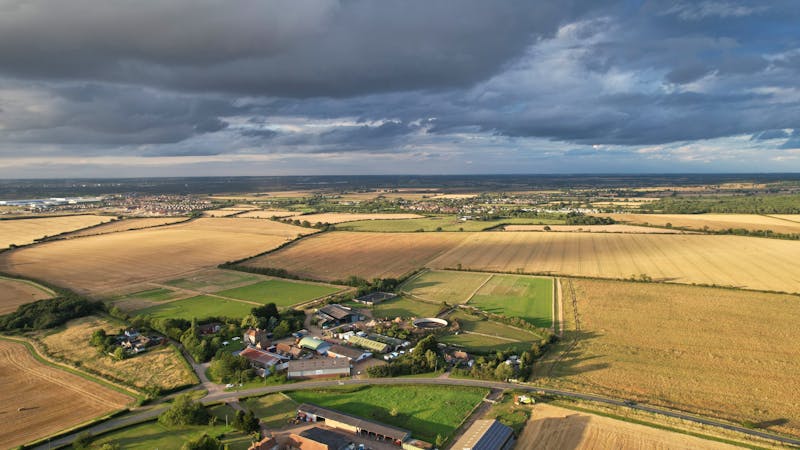
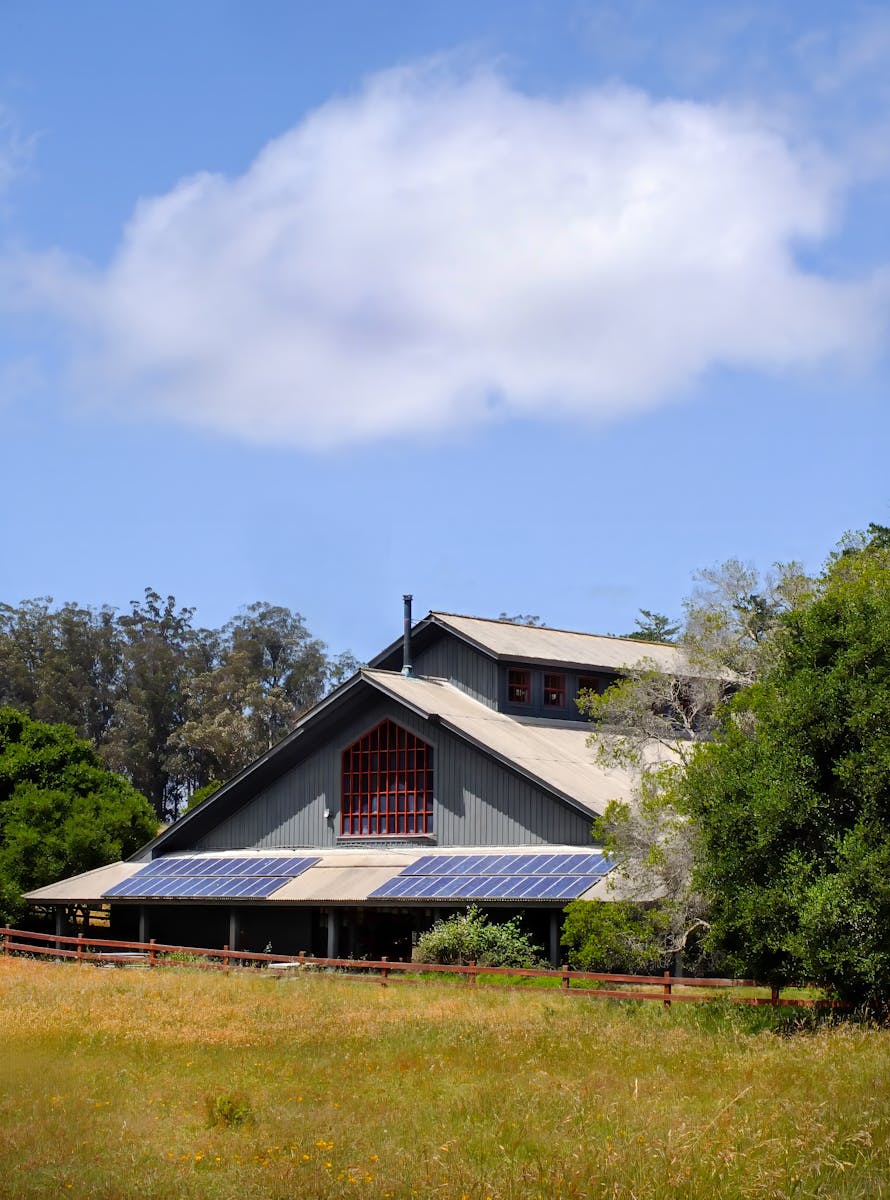
320 kW combined re-roof and PV on a Cheshire dairy farm
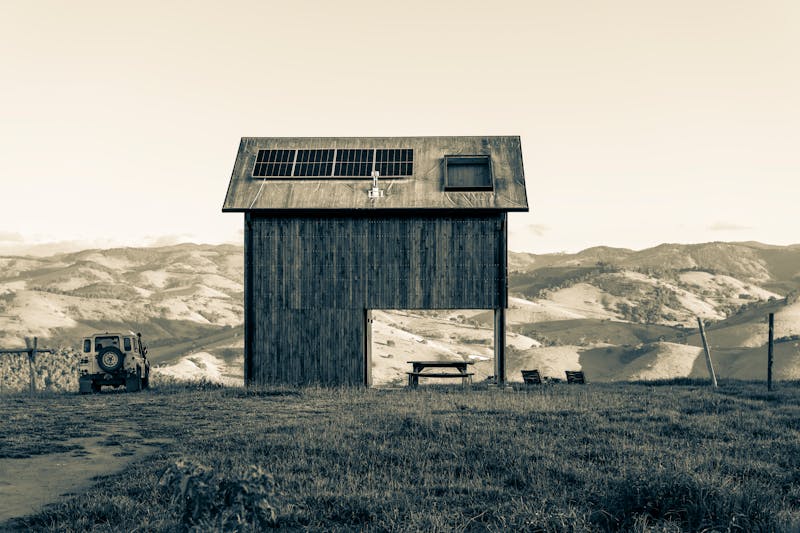
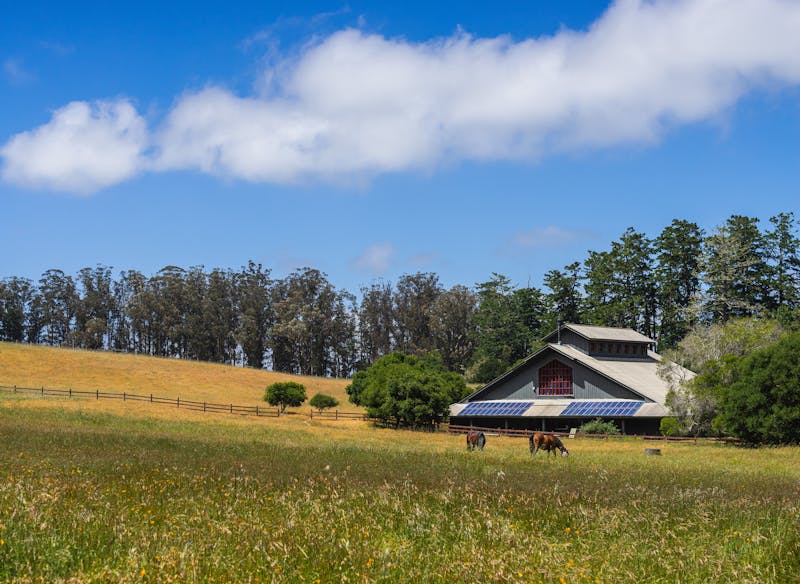
A 480-cow dairy farm in mid-Cheshire with three connected livestock buildings totalling 2,800 sqm of pre-1995 asbestos cement roofing. Annual electricity spend £62,000 across robotic milking, bulk tank cooling, parlour washdown, cubicle-housing lighting and ventilation. Family-owned, two-generation transition under way, strong Arla 360 sustainability commitment.
Specialist installers vs generalist contractors for solar panels for farm buildings
| Specialist agricultural installer MCS-certified, sector-focused | Generalist contractor General electrical / building | In-house DIY Self-managed | |
|---|---|---|---|
| MCS-certified (≤50 kW) or G99-signed-off installs with references | Sometimes | ||
| Half-hourly meter data modelling | |||
| Sector-specific compliance | |||
| Insurance-backed workmanship warranty | Sometimes | ||
| PPA / asset finance options | Sometimes | ||
| Fixed-price proposal | Sometimes | ||
| Sub-vertical case studies |
Locations we cover
solar panels for farm buildings delivered across the UK. Click any location for local cost data, council schemes, and grid connection timescales.

London
Greater London. 8,908,081 population. Greater London Authority 2030 net zero.

Birmingham
West Midlands. 1,141,816 population. Birmingham City Council 2030 net zero.

Leeds
West Yorkshire. 793,139 population. Leeds City Council 2030 net zero.

Sheffield
South Yorkshire. 584,853 population. Sheffield City Council 2030 net zero.

Manchester
Greater Manchester. 568,996 population. Manchester City Council 2038 net zero.

Bradford
West Yorkshire. 546,412 population. Bradford Council 2038 net zero.
BEFORE YOU SIGN ANYTHING
What a good farm solar quote includes
Hold every proposal — from any installer — to this standard. The numbers below are the 2026 benchmarks, sourced and dated.
With the yield assumption shown. Realistic UK range: 850–1,100 kWh per kWp — treat anything higher as a red flag.
Flat SEG tariffs pay roughly 4–12p/kWh as at July 2026. A quote still modelling 15p export income is using stale data.
100% Annual Investment Allowance up to £1M. Solar sits in the special-rate pool — full expensing does not apply.
CHECKED SEPTEMBER 2026
Solar panels for farm buildings: the facts that decide the project
Most pages ranking for this term are installer brochures that skip the rules. These are the figures a farm-building project actually turns on, each checked against its primary source in September 2026.
| Question | The verified position | Source |
|---|---|---|
| Planning permission for a barn-roof array? | Permitted development in England under Part 14 Class J: ≤0.2 m proud of a pitched roof, ≤1 m on a flat roof, ≥1 m from the roof edge, not on a listed building or scheduled monument; no capacity cap; prior approval on design and glare above 50 kW (56 days). | GPDO 2015 Sch 2 Pt 14 Class J, as amended Dec 2023 |
| Do I need a DNO application? | Yes above 3.68 kW per phase. Up to that limit is G98 connect-and-notify; above it G99 must be approved before energising. | ENA Engineering Recommendations G98 / G99 |
| What will the roof yield? | For a 10° south-facing pitch PVGIS gives about 772 kWh/kWp in Glasgow, 807 in Manchester, 920 in London and 946 in Cardiff. Steeper south pitches do better. | EU JRC PVGIS 5.3 |
| Is there a grant? | No open capital grant for rooftop PV in England, Wales or Scotland. England IFP (25%) closed; Wales Small Grants — Efficiency funded solar fencing and water pumps only; Scotland FFIS excluded renewables. | gov.uk funding for farmers (22 Sep 2026); gov.wales; ruralpayments.org |
| What tax relief applies? | 100% Annual Investment Allowance up to £1m a year (solar is special-rate plant). Full expensing does not apply; above the cap companies get the 50% special-rate first-year allowance. Business rates: eligible on-site renewables plant excluded from rateable value to 2035 in England. | CAA 2001 s.104A; HMRC capital allowances guidance; VOA |
| Export income? | Smart Export Guarantee: licensed suppliers must offer a tariff for eligible installations up to 5 MW, paid on export meter readings; rates vary widely and are not fixed by Ofgem. | Ofgem SEG |
| Asbestos cement roof? | Strip or over-clad first. Most asbestos cement work is non-licensed but needs trained operatives, intact double-wrapped sheets and licensed disposal; CAR 2012 imposes a duty to manage, not to re-roof. | HSE asbestos FAQ; Control of Asbestos Regulations 2012 reg 4 |
| EV chargers in the same project? | Workplace Charging Scheme pays 75% up to £500 per socket, 40 sockets, open to 31 March 2027. | OZEV WCS guidance (rate since 1 April 2026) |
What actually decides the payback on solar panels for farm buildings
Three things, in this order: how much of the generation the farm uses on site, what the roof yields, and what the grid connection allows. Everything else — panel brand, inverter choice, even the price per kilowatt — moves the answer by less than those three.
Self-consumption first. A unit used on the farm displaces an import at the retail rate; a unit exported earns a Smart Export Guarantee rate that is a fraction of it and varies by supplier. That is why a dairy parlour with round-the-clock cooling and a poultry shed with continuous ventilation reach payback years before a grain store whose load peaks in the drying season. Ask for the self-consumption ratio in every quote and for the half-hourly meter data it was modelled from; a quote that assumes a flat percentage without your data is a guess.
Yield second. The PVGIS figures in the table above are for a 10° pitch, which is typical of portal-frame livestock and grain buildings; a steeper south-facing slope does better and an east–west roof does worse. The range across the UK is wide enough that the same array pays back a year or more sooner in Cardiff than in Glasgow, so a national payback figure is close to meaningless — insist on a location-specific yield assumption.
The connection third. Almost every farm-building array is above 3.68 kW per phase, so it needs a G99 application approved before it is energised. On a constrained rural feeder the network operator may cap export or ask for reinforcement, and that offer — not the installation — sets the programme and can decide whether a no-export design makes more sense than a larger array. A good installer submits the application straight after the structural survey so the answer arrives before the panels do.
The tax relief does not change which projects work, but it changes when: 100% Annual Investment Allowance on special-rate plant brings a six-year nominal payback forward by roughly the corporation-tax saved in year one. With no capital grant open in 2026, that allowance plus self-consumption is the whole case — which is exactly what the payback calculator models when you put your own meter data in.
Common questions
The questions we hear most from farm owner.
Do solar panels on farm buildings need planning permission?
Usually not in England. Roof-mounted solar on a non-domestic building is permitted development under Class J of Part 14 of the General Permitted Development Order if the panels sit no more than 0.2 m proud of a pitched roof (1 m on a flat roof), stay at least 1 m from the roof edge and the building is not listed or a scheduled monument. There is no capacity cap since the December 2023 amendment, but above 50 kW you must apply for prior approval on design and glare, which the council has 56 days to decide.
What size farm solar system needs a DNO application?
Anything above 3.68 kW per phase (16 A). Up to that limit an installer can connect under G98 and notify the network operator afterwards; above it a G99 application must be approved before the system is energised. Almost every farm-building array is a G99 job, and on constrained rural feeders the connection offer, not the install, sets the programme.
Are there grants for solar panels on farm buildings in 2026?
Not a capital grant in England, Wales or Scotland when checked in September 2026. The England Improving Farm Productivity round that funded rooftop PV at 25% has closed, the Welsh Small Grants — Efficiency window funded only a solar fencing energiser and a solar water pump, and the Scottish Future Farming Investment Scheme listed renewable energy as ineligible. What is open: 100% Annual Investment Allowance on the PV plant, Smart Export Guarantee income, and the £500-per-socket Workplace Charging Scheme for EV chargers.
Can you put solar panels on an asbestos cement farm roof?
Installers will not normally fix through asbestos cement sheets, so the practical route is to strip or over-clad the roof first. Most work on asbestos cement is non-licensed under the Control of Asbestos Regulations 2012 but must be done by trained operatives, sheets are kept intact and double-wrapped, and the waste goes to a licensed disposal site. The regulations impose a duty to manage asbestos, not a duty to re-roof.
How does the tax relief on farm solar work?
Solar panels are special-rate plant. The Annual Investment Allowance gives 100% relief on the first £1m of qualifying plant-and-machinery spend in the year, which covers almost every farm-building install. Full expensing does not apply to solar; above the AIA cap a company gets the 50% special-rate first-year allowance. In England eligible on-site renewables plant is also left out of the rateable value for business rates until 2035.
How much electricity will a farm roof generate?
PVGIS puts a low-pitch (10°) south-facing array at roughly 770 kWh per kWp a year in Glasgow, 810 in Manchester, 920 in London and 950 in Cardiff. A steeper south-facing pitch does better and an east–west roof does worse, so ask for the yield assumption in every quote and treat anything above about 1,000 kWh per kWp in the UK as a figure to challenge.
Looking for something specific?
Dedicated landing pages for the most common search variants and installer-intent queries:
Specialist farm sub-sectors your installer works with
Beyond the eight headline farm-building types, we publish focused pages for specialist UK agricultural sub-sectors where solar economics are particularly strong or where compliance requires sector-specific design:
Estate landlords & tenant farmer programmes
If you farm on a long-tenanted estate, the landlord conversation usually decides whether PV happens. The lease-addendum process is well trodden with the major UK rural landlords:
How a farm solar project runs — every step
From first meter-data review to 25-year monitoring contract. Productised services with fixed scope and price at each stage:
Solar plus — paired technologies
Most farm projects beyond 100 kW pair PV with at least one other technology to optimise self-consumption, demand response, or fleet electrification. Five integration deep-dives:
By farm structure & ownership
Different farm structures have different decision-making patterns and finance routes. Pages tailored to each:
Scottish farms access rural investment schemes rather than English equivalents, and steadings and grain stores benefit from commercial solar installers Scotland who know the SSEN and SP Distribution G99 process.
For the funding and grant options behind a farm-building project, the full guide is a useful reference.
Farmers in West and South Yorkshire often work with a commercial solar installer in Yorkshire for barn-roof and yard arrays.
Rotherham landowners adding rooftop solar to barns and outbuildings often bring in a renewables installer near Rotherham for the domestic side.