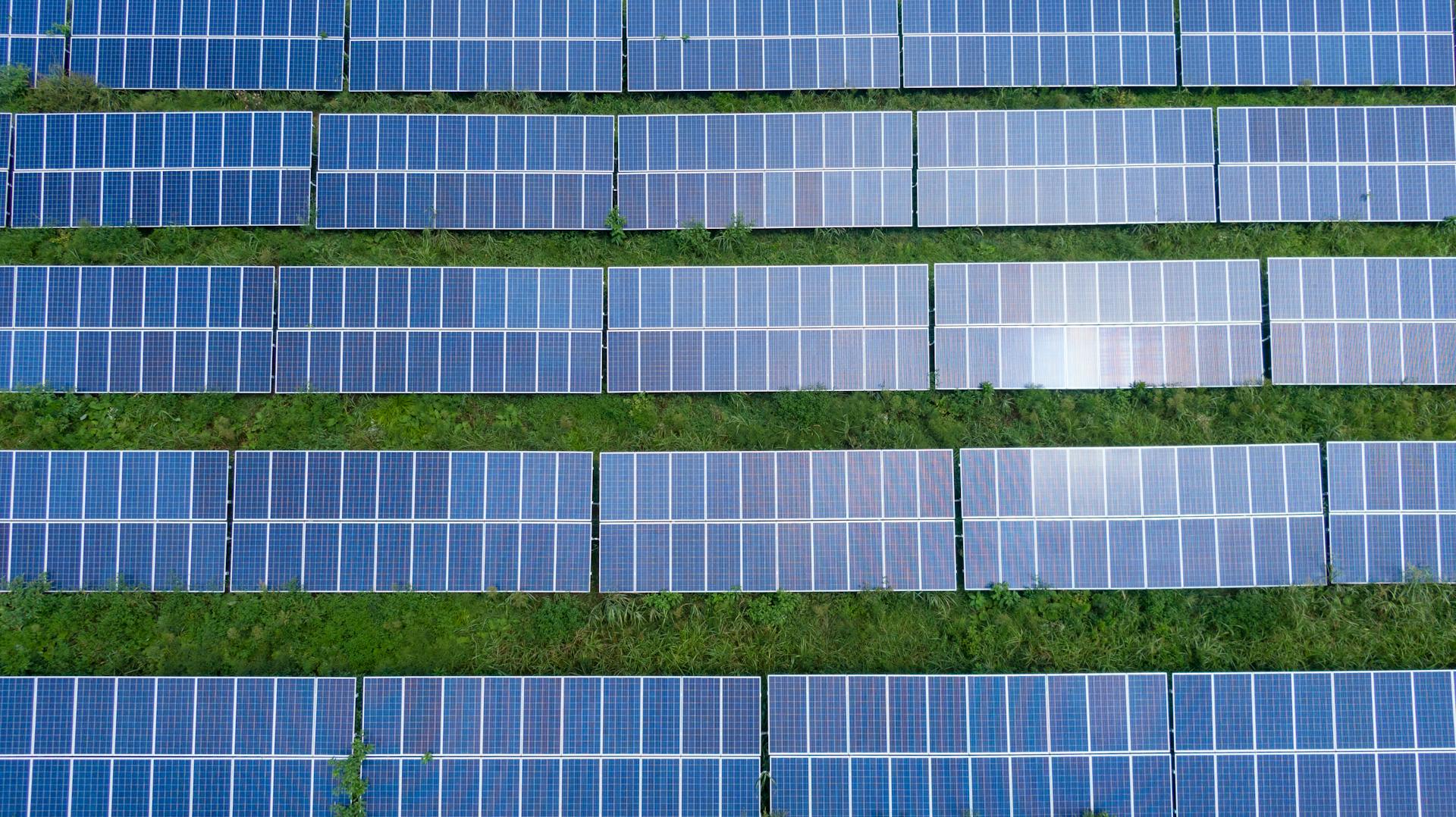
Government Grants & Incentives for Farm Solar Panels in the UK
UK farmers can access a range of grants, tax reliefs, and export tariffs that significantly reduce the cost of installing solar panels on agricultural buildings. This guide explains every scheme available in 2025.
Why UK Farmers Can Significantly Reduce Solar Costs Through Grants
The combination of capital grants, tax reliefs, and ongoing export income means the true net cost of a farm solar installation is often 30-50% less than the headline price.
The UK government has committed to achieving Net Zero by 2050 and has introduced a series of measures to encourage farmers and rural businesses to invest in renewable energy. For solar panels on farm buildings, this translates into a layered system of financial support: upfront capital grants to reduce installation costs, tax allowances to reduce the taxable cost further, and ongoing income from electricity generated and exported.
Understanding which schemes apply to your farm — and how to combine them legally — is the key to maximising the financial return on your solar investment. Our agricultural solar specialists help every client navigate the grants landscape as part of a free initial consultation before any commitment is made.
The Farming Investment Fund (FIF)
The primary capital grant programme for UK farmers investing in renewable energy infrastructure.
Improving Farm Productivity Grant
The Improving Farm Productivity (IFP) grant within the Farming Investment Fund specifically targets investments that reduce a farm's dependence on fossil fuels and improve energy efficiency. Solar panels and solar-enabled equipment are eligible items, with grant rates of up to 25% for standard applicants and higher rates for applicants meeting additional productivity criteria.
- Grant rate: up to 25% of eligible costs (£15,000 minimum project, no upper limit for larger sites)
- Eligible items: solar panels, inverters, mounting systems, battery storage, grid connection equipment
- Applications via the Rural Payments Agency (RPA) online portal — approval required before ordering equipment
- Open to registered agricultural businesses in England; devolved equivalents exist for Scotland, Wales, and Northern Ireland
Farming Equipment and Technology Fund (FETF)
The FETF provides smaller, faster grants for specific items of farming equipment with pre-agreed grant values. Certain solar-related items appear on the FETF grant list, including solar-powered livestock waterers, ventilation systems, and remote monitoring equipment. The FETF is simpler to apply for than the IFP grant and is well suited to smaller farms or those looking to supplement a larger installation.
Grant values under FETF are fixed per item — typically £500 to £5,000 per piece of equipment — and applications are processed on a first-come, first-served basis when funding rounds open.
The Smart Export Guarantee (SEG)
Earn money for every unit of surplus solar electricity you export to the National Grid — for the full 25-year life of your system.
The Smart Export Guarantee replaced the Feed-in Tariff for new installations and requires all licensed electricity suppliers with 150,000 or more customers to offer an export tariff. Unlike the old Feed-in Tariff, SEG rates are not set by government — suppliers compete on the rates they offer, which means rates have varied considerably.
| Supplier | SEG Rate (2025) | Notes |
|---|---|---|
| Octopus Energy | Up to 24p/kWh | Outgoing Octopus (flexible) |
| OVO Energy | 15p/kWh | Fixed rate product |
| E.ON Next | 6.4p/kWh | Next Drive tariff |
| EDF | 5.6p/kWh | Flex export |
| British Gas | 5.5p/kWh | Export SmartPay |
Rates are indicative as of early 2025 and subject to change. Always confirm current rates directly with your chosen supplier.
For a typical 50 kW farm solar system generating approximately 45,000 kWh per year with 30% exported, SEG income at 10p/kWh would generate around £1,350 annually — paid for 25 years or more, with no additional costs once the system is installed.
Capital Allowances and Tax Relief for Farm Solar
Solar panels on farm buildings qualify for full Annual Investment Allowance — one of the most valuable tax reliefs available to UK agricultural businesses.
Annual Investment Allowance (AIA)
The Annual Investment Allowance allows UK businesses, including farms, to deduct 100% of qualifying capital expenditure from taxable profits in the year of purchase. Solar panels and associated electrical equipment are qualifying plant and machinery for AIA purposes.
With the AIA threshold currently set at £1 million per year, virtually every farm solar installation will qualify for full first-year relief. For a farm in the 20% income tax band, a £150,000 solar installation would reduce the tax bill by up to £30,000 in the year of purchase — on top of any capital grant received.
Example: Tax Impact on a 100 kW Farm Installation
- Installation cost: £150,000
- Less FIF grant (25%): -£37,500
- Net cost before tax: £112,500
- AIA relief at 20% tax rate: -£22,500
- Effective net cost: £90,000
- Plus SEG income over 25 years: ~£33,750
- True net cost after all incentives: ~£56,250
VAT Treatment
Solar panels installed on agricultural buildings are subject to 20% VAT. VAT-registered farms can reclaim this in full through their normal VAT return. Non-VAT-registered farms may be able to register voluntarily if the installation pushes taxable turnover above the threshold, or they can explore the VAT-inclusive pricing implications with their accountant. Our quotes are always provided both ex-VAT and inc-VAT so you can plan accordingly.
Grants in Scotland, Wales & Northern Ireland
Each devolved nation operates its own agricultural grant programmes alongside the UK-wide schemes.
Scotland
- • Agricultural Transformation Programme (ATP)
- • Scottish Rural Development Programme capital grants
- • Agri-Environment Climate Scheme (AECS)
- • Climate Change Support Grant
Administered by Scottish Government Rural Payments and Inspections Division (RPID).
Wales
- • Sustainable Farming Scheme (SFS) transition payments
- • Rural Investment Scheme (RIS)
- • Wales Agri-tech Initiative grants
- • Welsh Government energy efficiency support
Applications through the Welsh Government's Agriculture portal.
Northern Ireland
- • NI Rural Development Programme capital grants
- • DAERA Farm Sustainability Grant
- • Countryside Management Scheme
- • Reconnect renewable energy grants
Administered by DAERA — applications via the Agri-food and Biosciences Institute.
Our Grant Support Service
We guide every client through the grants process at no extra charge — it's part of our commitment to making farm solar accessible.
Grant Eligibility Assessment
We assess which schemes you are eligible for based on your farm type, location, business structure, and planned investment.
Technical Documentation
We prepare all technical specifications, energy assessments, and costings required for grant applications in the format stipulated by the RPA or devolved equivalent.
Application Timing
We track grant round opening dates and alert you when new funding rounds become available, so you don't miss competitive windows.
Financial Modelling
We model the combined impact of grants, tax reliefs, SEG income, and energy savings to give you a clear picture of your true return on investment.
Important: Apply Before You Order
Most capital grant schemes require you to receive a grant offer letter before committing to purchase. Starting the installation process before grant approval will almost certainly disqualify your application. Contact us early — ideally 3-6 months before your planned installation date — so we can identify the right scheme and submit your application in time.
Frequently Asked Questions About Farm Solar Grants
Answers to the questions our clients ask most often about grant funding for solar panel installations on farm buildings.
Find Out Which Grants Your Farm Qualifies For
Our grant specialists will carry out a free eligibility assessment and help you access every penny of funding available for your solar installation.
Talk to Our Grant Specialists
Contact us today for a free grant eligibility assessment. We'll identify every scheme your farm qualifies for and help you maximise your funding.