Solar Panels for Farm Barns
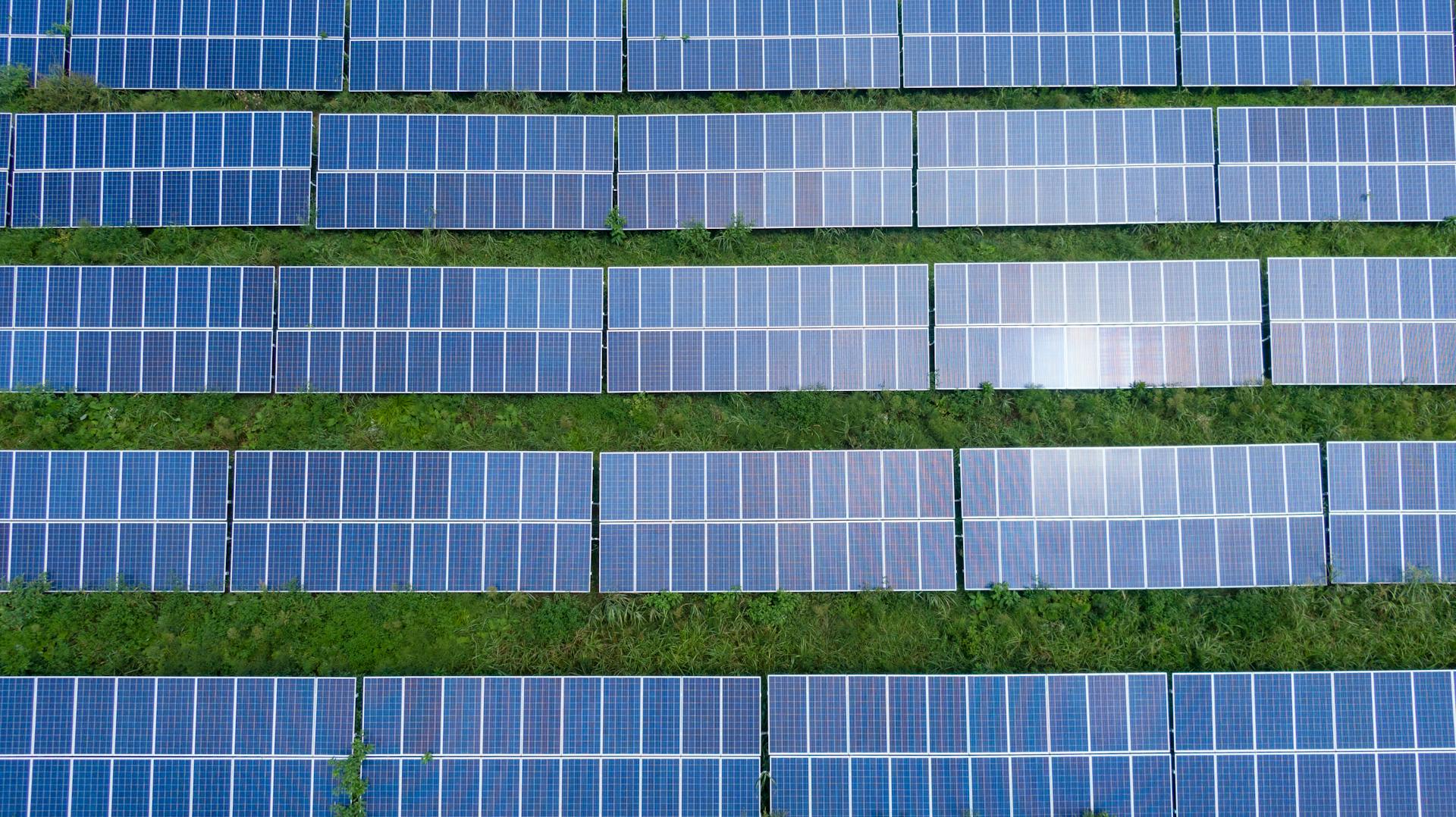
Farm barns offer some of the largest uninterrupted roof spans in British agriculture — making them ideal candidates for large-scale solar installations that power your entire farm operation.
Why Farm Barns Are Ideal for Solar
Of all the structures on a British farm, the large grain or machinery barn stands out as the single greatest solar opportunity. A modern 100m x 20m grain store presents a 2,000m2 roof — large enough to accommodate 400 kW or more of solar panels, equivalent to a commercial-scale power plant. Even a modest storage barn of 500m2 can support a 100 kW system generating over 90,000 kWh per year. The fundamental qualities that make barns so effective for solar are straightforward: large uninterrupted roof spans free from skylights, ridgeline ventilators, and roof penetrations; south-facing roof pitches on the principal slopes of most east-west oriented buildings; and the robust steel portal frame construction that has been standard across UK agriculture since the early 1980s.
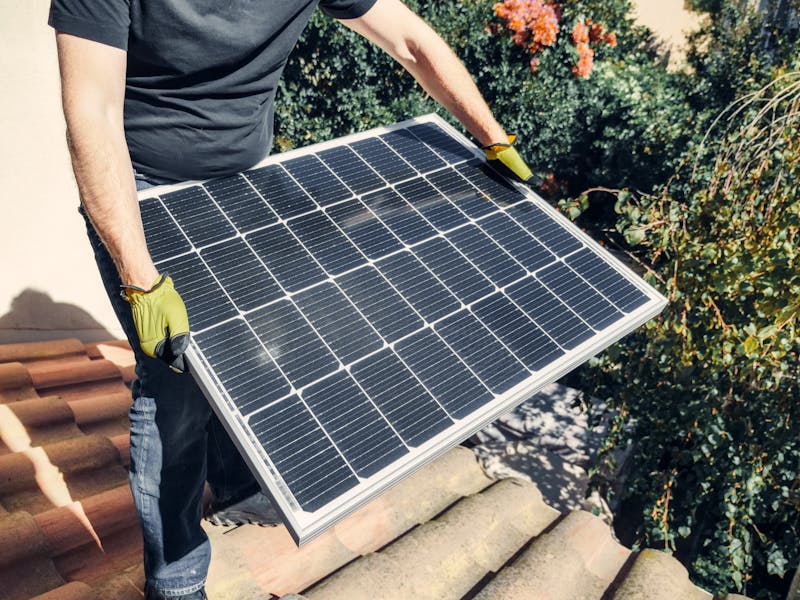
Steel portal frame barns built from the 1980s onwards are engineered to carry substantial loads — grain, hay, and machinery impose far greater forces on roof purlins than solar panels ever will. A standard 400W panel weighs approximately 20 kg, and a well-designed mounting system adds modest additional load, well within the structural capacity of any sound agricultural building. Unlike many commercial properties where structural surveys reveal costly reinforcement requirements, farm barns are typically straightforward to assess and prepare for installation.
Many barns used primarily for storage carry a low direct electrical load — perhaps just lighting and a few sockets. This does not diminish their solar potential. Through export tariffs under the Smart Export Guarantee, excess generation is sold back to the grid at market rates, generating income even when on-site consumption is minimal. Where the barn is within cabling distance of higher-consumption buildings — the grain dryer, workshop, farm office, or dairy — a private wire connection delivers solar electricity directly to those loads, substantially improving financial returns. Use our solar savings calculator to explore the potential for your holding, or review our farm building roof suitability guide for more technical detail.
Types of Farm Barns Suitable for Solar
The UK agricultural estate encompasses a wide variety of barn types, from Victorian stone and timber structures to modern steel-framed grain stores. Solar is viable across most of them, though the approach varies by construction type. Our surveyors are experienced with every category of agricultural building and will assess suitability, structural loading, and roof condition during your free site visit.
Portal Frame Steel Barns
The gold standard for agricultural solar. Post-1980 portal frame buildings with standard cold-rolled purlins accept through-fix mounting systems without structural modification. Roof pitches are typically 10 to 15 degrees, which is well within the optimal range for UK solar yields. Clear spans of 12 to 30 metres with no internal obstructions allow uninterrupted panel arrays. These buildings account for the majority of large agricultural solar installations in the UK and routinely deliver systems of 50 to 400 kW.
Traditional Timber Frame Barns
Older timber-framed barns require a structural engineer's assessment before installation, as purlin spacing, timber condition, and rafter sizing vary considerably. Where the structure is sound, solar is often entirely viable, and the visual character of traditional barns can be sympathetically retained with in-roof or low-profile mounting systems. Listed buildings require additional planning consideration but have been approved for solar in many cases where impact on character is demonstrably minimal.
Dutch Barns and Open-Sided Structures
Dutch barns with open sides and covered main spans present a different challenge but remain viable for solar on the primary roof. The key structural element is the integrity of the principal rafters and any purlins. Where the main roof span is enclosed and weatherproof, solar panels can be mounted conventionally. Open-sided sections require wind load calculations to account for the absence of enclosed walls, which our structural consultants handle as part of the project design.
Covered Yards and Handling Areas
Covered livestock handling and collecting yard structures are excellent solar candidates, combining large roof areas with proximity to electrical loads from automatic gates, heating, and lighting. Many handling facilities were built or upgraded in the 2000s and 2010s with modern steel-frame construction fully capable of supporting solar loads. The lower internal clearance of some handling buildings means inverter and cabling installation requires careful planning, which our installation teams are experienced in managing.
Barn Solar System Sizing Guide
System capacity is determined by available roof area, structural loading, and the balance between on-site consumption and export. The ranges below reflect typical installations across each barn size category.
Small Barn
100 to 300 m2 roof area
20 to 50 kW
- 18,000 to 47,000 kWh annual generation
- 40 to 120 solar panels
- Suits supplementing farm yard load or SEG export
- Typical payback 5 to 8 years
Medium Barn
300 to 800 m2 roof area
50 to 150 kW
- 47,000 to 142,000 kWh annual generation
- 120 to 360 solar panels
- Private wire to multiple farm buildings viable
- Typical payback 5 to 7 years
Large Barn
800 m2 and above
150 to 400 kW
- 142,000 to 380,000 kWh annual generation
- 360 to 950+ solar panels
- Commercial-scale project with grid connection upgrade
- PPA and financing options available
For large commercial-scale projects, we offer Power Purchase Agreements that require no upfront capital and agricultural finance packages tailored to the seasonal cash flow of farming businesses.
Private Wire Connections Between Buildings
When a barn generating solar electricity is located some distance from the farm's primary energy consumers, private wire cabling resolves the distance entirely. A private wire is simply a dedicated underground cable run that carries electricity generated on-site directly from the solar inverter to the load — bypassing the public grid, avoiding distribution costs, and delivering power at the full avoided import rate rather than the lower SEG export tariff.
In practice, this means a large grain store on the edge of a farm yard can supply solar electricity directly to the dairy, workshop, grain dryer, farm office, or farm cottages. The underground route is protected under permitted development rights for agricultural land, so no separate planning consent is typically required for the cable itself. We handle all electrical design, cable sizing, DNO notification, and G99 protection relay requirements for the connected installation.
For barns that are genuinely remote from farm loads — or where morning and evening peaks in farm demand do not align with midday solar generation — battery storage installed within the barn allows load shifting. Energy generated at peak solar output is stored and then dispatched to the private wire during the morning milking, evening grain drying, or any other period when the farm's electricity demand is highest. This combination of barn solar, private wire, and battery storage can reduce a farm's grid dependency by 70 to 90 percent across the year.
Private Wire: Key Facts
No grid charges on private wire electricity
Power delivered via private wire avoids the distribution use of system charges applied to grid imports, increasing the effective value of every unit generated.
Permitted development for underground routes
Underground cable routes on agricultural land generally do not require planning permission, and reinstatement of the surface is straightforward after trenching.
Battery storage compatible
Barn-sited battery systems store surplus midday generation for dispatch during morning and evening demand peaks, dramatically increasing the proportion of solar consumed on-site.
Full electrical design and DNO notification included
Our electrical engineers produce all required designs, protection relay specifications, and DNO application documentation as part of the project delivery.
Farm Barn Solar Case Study
450m2 Machinery and Storage Barn, Devon Mixed Farm
A Devon mixed farm with a 450m2 steel portal frame machinery and storage barn installed an 80 kW solar system across the south-facing roof slope. The barn itself housed farm vehicles and winter fodder storage, with a modest direct electrical load. Private wire cabling connected the generation point to the farm office, dairy building, and main machinery workshop, substantially increasing on-site consumption.
Total 25-Year Benefit
£275,000+
in electricity savings and SEG export income over the system lifetime
"We never thought a storage barn could produce this kind of return. The private wire connection to the dairy was straightforward and the whole farm now benefits. The payback was faster than we expected."
- Farm Manager, Devon
Find out what your barn could generate and save.
Calculate Your SavingsFarm Barn Solar: Frequently Asked Questions
Answers to the most common questions about installing solar panels on agricultural barns and storage buildings.
Make Your Farm Barn Work Harder
A free site survey will show you exactly what your barn roof could generate and how that electricity can serve your farm. Contact our agricultural solar team today.
Related Agricultural Solar Services
Explore our full range of specialist farm building solar installations.
Dairy Farm Solar
Milking parlour, bulk tank, and cubicle housing systems. Savings of 40–65% for dairy operations.
Grain Store Solar
Offset grain drying energy. Peak solar generation aligns perfectly with harvest season.
Livestock Farm Solar
Pig units, sheep housing, and cattle barns. Reduce ventilation, heating, and feeding costs.
Cattle Shed Solar
Solar for beef and dairy cattle housing. Large roof spans maximise generation capacity.
Poultry House Solar
High-consumption poultry operations save most with solar. Typical payback 3–5 years.
Milking Parlour Solar
Fastest payback on any dairy building. Purpose-designed for vacuum pump and bulk tank loads.
Arable Farm Solar
Systems from 100–500 kWp for grain stores, machinery sheds, and potato stores.
All Services
View the complete range of farm solar services
Available Across the UK's Key Farming Counties
We serve agricultural businesses in every UK county. Below are some of our most active agricultural regions:
Discuss Your Barn Solar Project
Whether you have a single 200m2 storage shed or a complex of large grain barns, we have the experience to design and deliver a solar system that maximises your return. Our agricultural solar specialists understand farm buildings, farm finances, and the operational demands of working farms.
What Your Free Survey Covers
- Structural assessment of roof construction, purlin spacing, and load capacity
- Roof condition report and recommendations where repairs or over-roofing are advisable
- Shading analysis across all roof slopes and an optimal panel layout
- Private wire route assessment for connecting to distant farm loads
- Full financial projection including payback, SEG income, and 25-year return